Mesaj Bırakın
Ürünlerimizle ilgileniyorsanız ve daha fazla bilgi edinmek istiyorsanız, lütfen buraya bir mesaj bırakın, en kısa sürede size cevap vereceğiz.

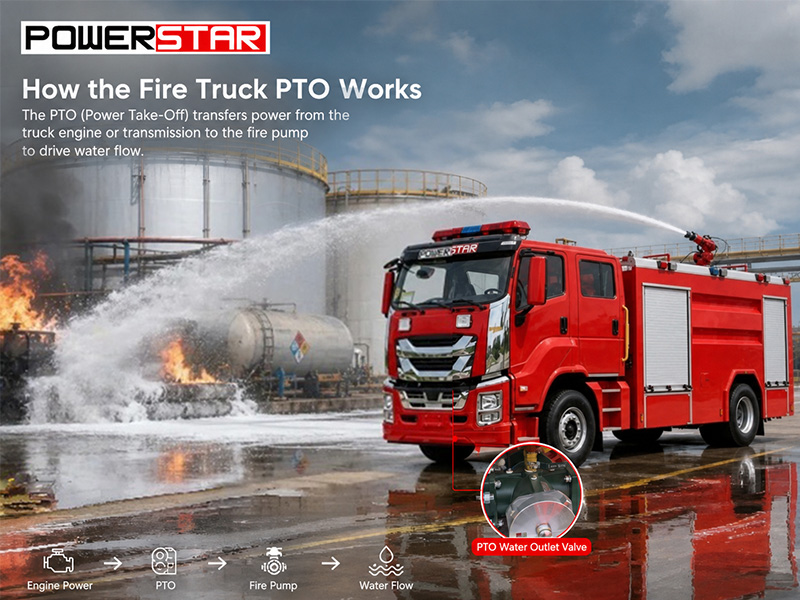
İtfaiye aracının PTO'su (Güç Alma Ünitesi), motor gücünü yangın pompasına aktaran bir güç aktarım cihazıdır. İtfaiyeci PTO'yu etkinleştirdiğinde, motordan gelen mekanik güç şanzıman ve PTO üzerinden yangın pompasına iletilir — bu, bir itfaiye aracının PTO sisteminin çalışma prensibinin temelidir — ayrı bir yardımcı motora ihtiyaç duymadan pompanın yüksek basınçlı, yüksek debili su veya köpük vermesini sağlar.
Modern itfaiye araçları genellikle yan monteli PTO veya tam güç PTO sistemleri kullanır. Bunlar dengeli güç çıkışı, kolay kullanım ve düşük bakım maliyetleri sunarak itfaiye aracının yangın söndürme sisteminin temel bir bileşeni hâline gelir.
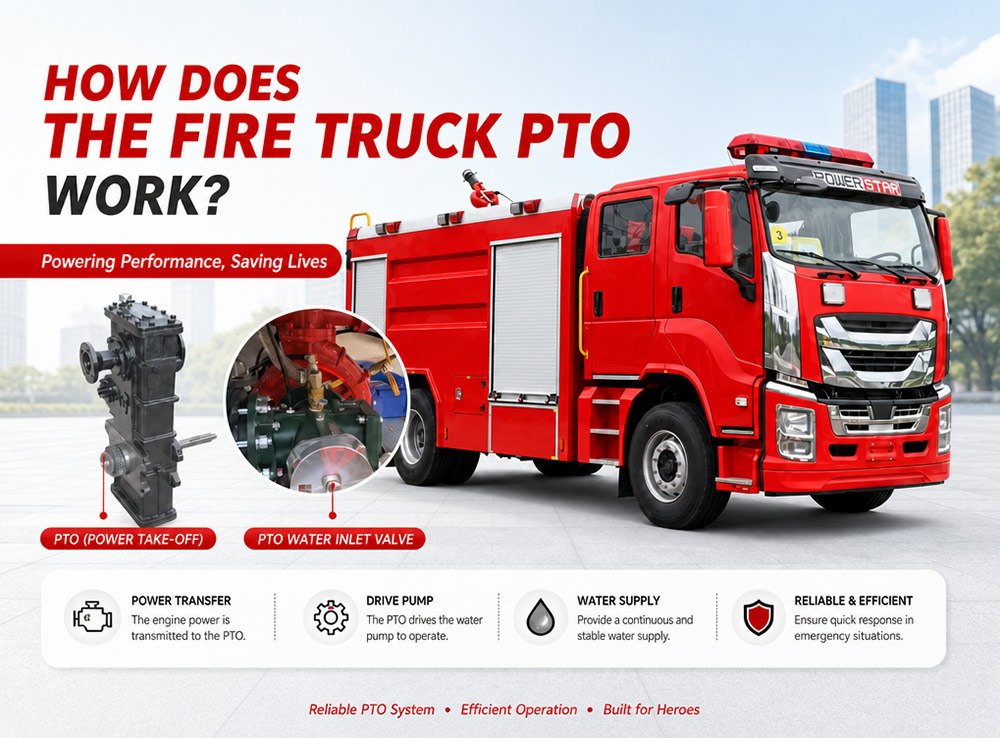
PTO (Güç Alma Ünitesi), itfaiye aracının güç sistemindeki kritik bir bileşendir. Araç motoru veya şanzımanından gelen mekanik gücün bir bölümünü, aracın normal sürüş kabiliyetini etkilemeden yangın pompasına veya diğer yardımcı ekipmanlara "yönlendirmek" için motor ile şanzıman arasına monte edilen bir dişli aktarım cihazıdır.
İtfaiye aracının motoru başlangıçta yalnızca tekerlekleri hareket ettirmekten sorumludur. Ancak itfaiye aracı yangın yerine ulaştığında tekerleklerin artık güce ihtiyacı kalmazken, yangın pompasının suyu çekmek ve basınçlandırmak için güce ihtiyacı vardır. PTO, bu "güç değişimini" gerçekleştiren cihazdır.
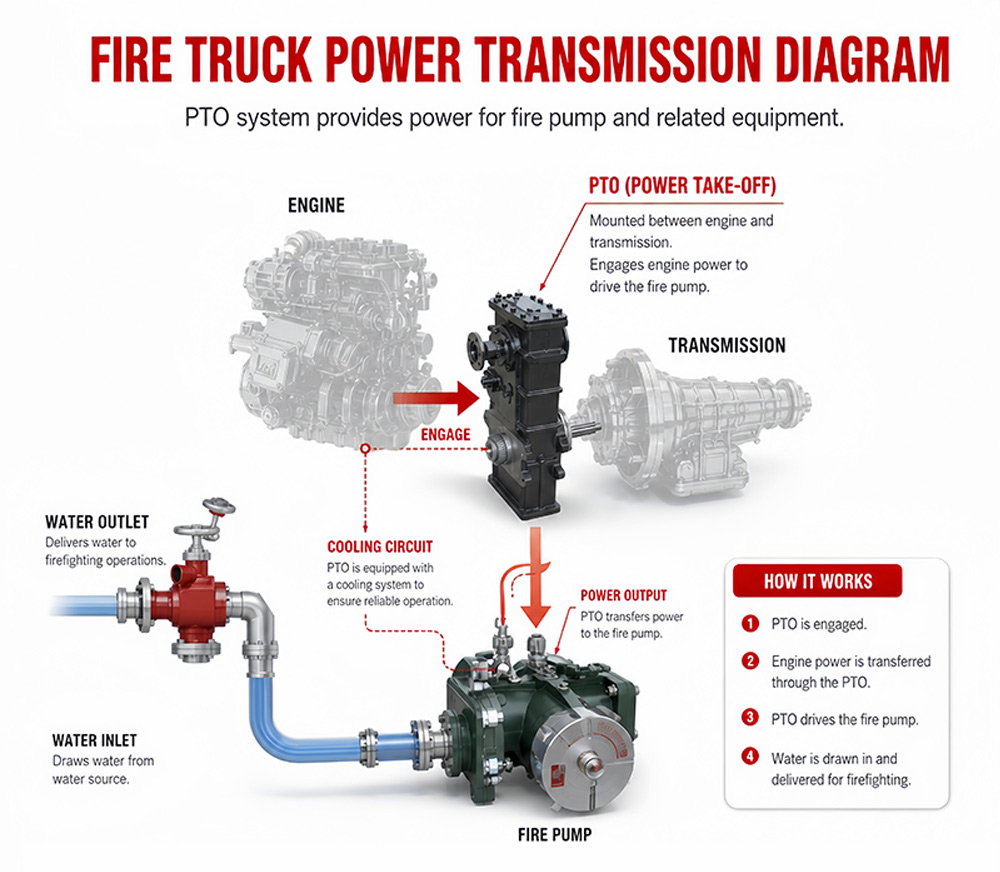
Güç Alma Ünitesi (PTO) kelimenin tam anlamıyla "güç çıkış cihazı" anlamına gelir.
İtfaiye aracında bu ifade, dişli bağlantısı aracılığıyla motor volanından veya şanzıman dişlilerinden dönme gücünün alınmasını ve yangın pompasına ya da diğer yardımcı ekipmanlara iletilmesini ifade eder.
Adı işlevini açıklar:
Motor = Güç kaynağı
PTO = Güç dağıtıcısı
Yangın pompası = Güç tüketim noktası
Bu nedenle PTO, "güç kaynağı" ile "yangın söndürme sistemi"ni birbirine bağlayan köprüdür.
İtfaiye araçlarının PTO ile donatılması gerekliliğinin temel nedeni, yangın söndürme operasyonlarının aracın sürüş durumuna bağlı olmayan sürekli, dengeli ve yüksek güçlü bir çıkış gerektirmesidir.
Başlıca nedenler:
1. Sürekli yangın söndürme gücü sağlar
Yangın pompasının yangın söndürme çalışmaları sırasında uzun süre çalışması gerekir. PTO, motorun rölantide veya sabit devirde yangın pompasını sürekli çalıştırmasına olanak tanıyarak dengeli su basıncı ve debi sağlar.
2. Güç kullanım verimliliğini artırır
PTO olmadan, yangın pompasını çalıştırmak için ayrı bir yardımcı motor gerekir; bu da şunları artırır:
Maliyet
Bakım karmaşıklığı
Arıza riski
Yer kullanımı
PTO, aracın motor gücünü doğrudan kullanarak genel verimliliği artırır.
3. Birden fazla yangın söndürme sistemini destekler
Modern endüstriyel itfaiye araçlarında yalnızca su pompaları değil, aynı zamanda şunlar da bulunabilir:
Köpük sistemleri
Kuru toz sistemleri
Yüksek basınçlı su sistemleri
Uzaktan kumandalı yangın monitörleri
PTO olmadan yalnızca iki çözüm vardır:
Pompayı çalıştırmak için ayrı bir motor kurmak → ağırlığı, maliyeti, bakım noktalarını artırır ve alan kaplar
Pompayı sürekli şanzımana bağlı tutmak → araç durduğunda pompa durur, sahada su pompalayamaz
PTO her iki sorunu da aynı anda çözer:
| Mod | PTO Durumu | Güç Aktarımı | Sonuç |
| Sürüş modu | Devre dışı | Tamamı tekerleklere | Normal sürüş |
| Yangınla mücadele modu | Devrede | Tamamı yangın pompasına | Sabit konumda pompalama |
PTO, esas olarak araç sürüş gücünü yangınla mücadele çalışma gücüne dönüştüren bir "güç dağıtım ve dönüşüm sistemi"dir.
Mühendislik açısından bakıldığında, tam güç yolu şöyledir:
Motor → Şanzıman → PTO → Tahrik Mili → Yangın Pompası → Yangın Monitörü/Hortum Sistemi
PTO'nun çalışma prensibi üç temel aşamada özetlenebilir: güç alma, devreye alma ve aktarım.
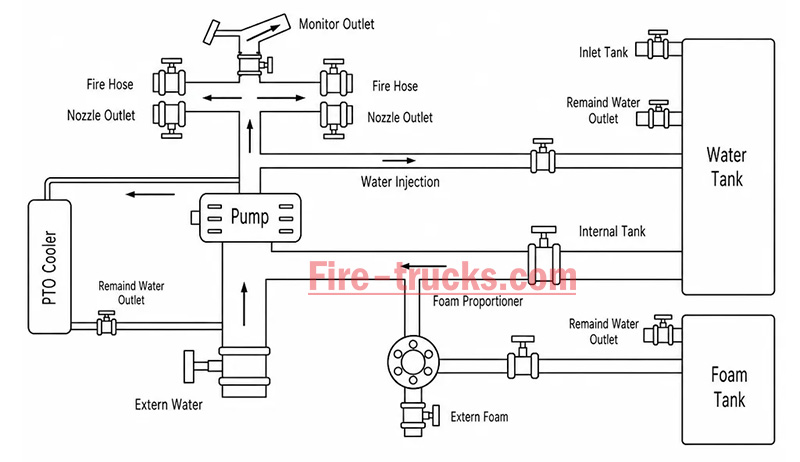
PTO gücü motordan alır. Kurulum konumuna bağlı olarak güç alma yöntemi değişir:
| PTO Tipi | Kurulum Konumu | Güç Kaynağı | Özellikler |
| Yana monte PTO | Şanzıman tarafı | Şanzıman karşı mil dişlisi | Basit yapı, daha düşük güç (≤ motor gücünün %50'si) |
| Sandviç PTO | Motor ve şanzıman arasında | Motor volanı | Tam güç çıkışı, yaygın kullanılan yapılandırma |
| Bölünmüş mil PTO'su | Şanzıman ve tahrik mili arasında | Şanzıman çıkış mili | Yüksek güç, sürüş sırasında pompalamaya olanak sağlar |
Sürücü kabinde PTO anahtarına bastıktan sonra, devreye alma mekanizması etkinleşir:
| Devreye Alma Yöntemi | Çalışma Prensibi | Yaygın Kullanım |
| Elektrikli solenoid kontrolü | Elektrik sinyali solenoidi etkinleştirir, vites çatalını iter | Modern itfaiye araçlarında yaygın kullanım |
| Pnömatik kontrol | Sıkıştırılmış hava pistonu iter, çatalı harekete geçirir | Büyük itfaiye araçları |
| Manuel kablo | Mekanik kablo çatalı doğrudan çeker | Daha eski araçlar |
Çalışma sırası:
PTO anahtarına basılır → Solenoid/silindir harekete geçer → Vites çatalı kaydırıcı dişliyi iter → Volan veya şanzıman dişlisiyle birbirine geçer → Güç bağlantısı sağlanır
PTO çıkış mili dönmeye başladıktan sonra, güç tahrik mili aracılığıyla yangın pompasına iletilir:
PTO çıkış mili döner → Tahrik mili → Yangın pompası giriş mili → Pompa çarkı döner → Su basınçlandırılır ve boşaltılır
| Adım | İşlem | Sonuç |
|---|---|---|
| Adım 1 | Motor çalışır, araç rölantide veya hareket halinde | Motor çalışıyor, PTO devre dışı |
| Adım 2 | Olay yerine varılır, sürücü PTO anahtarına basar | Sürüş gücü devreden çıkarılır (bazı modellerde), PTO dişlisi etkinleşir |
| Adım 3 | PTO, şanzıman ile güç bağlantısı kurar | Şanzıman gücü PTO çıkış miline aktarılır |
| Adım 4 | Tahrik mili gücü yangın pompasına iletir | Yangın pompası sürekli mekanik güç almaya başlar |
| Adım 5 | Yangın pompası çarkı yüksek hızda döner | Emiş → Basınçlandırma → Tahliye hatlarına iletim → Yangınla mücadele |
| Adım 6 | Sistem dengeli devire ulaşır | Kararlı çıkış, ayarlanabilir basınç, debi ve püskürtme deseni |
İtfaiye aracının PTO sistemi, motor gücünü yangın pompasına aktarmak için birlikte çalışan birden fazla bileşene sahip eksiksiz bir güç aktarım zinciridir. Sistem şu şekilde ayrılabilir: altı temel bileşen:
Motor, PTO sisteminin güç kaynağı ve tüm itfaiye aracının kalbidir.
İşlev: Ham dönme gücü üretir ve volanı veya krank milini çalıştırır.
Güç çıkışı: Genellikle 300–600 HP (şasi modeli ve konfigürasyona bağlı olarak).
PTO ile ilişkisi: PTO gücü motor volanından veya krank milinden alır — bu, gücün başlangıç noktasıdır.
Temel özellik: Motor devri, PTO çıkış hızını ve yangın pompasının su tahliye kapasitesini doğrudan etkiler. İtfaiye araçları genellikle yalnızca aracı hareket ettirmekle kalmayıp yangın pompası için de yeterli güç rezervi sağlayan yüksek güçlü dizel motorlarla donatılmıştır. PTO devreye alındıktan sonra operatör, motor devrini ayarlayarak pompa tahliye basıncını kontrol edebilir.
Şanzıman, güç iletiminden ve hız uyumundan sorumludur.
İşlev: Motor gücünü alır ve farklı dişli kombinasyonları aracılığıyla hızı ve torku ayarlar.
PTO ile ilişkisi: Yana monte PTO, gücü dahili şanzıman dişlilerinden alır; sandviç PTO, şanzımanın ön kısmına monte edilir.
Temel özellik: Şanzıman vites konumu PTO çıkış hızını etkilemez — PTO, vites seçiminden bağımsız olarak çalışır.
İki güç alma konumu:
Şanzıman yan penceresi güç alma ünitesi: PTO, şanzımanın yanına monte edilir ve gücü karşı mil veya ara mil dişlilerinden alır; orta hizmet sınıfı itfaiye araçlarında yaygındır.
Şanzıman arka uç güç alma ünitesi (sandviç): PTO, motor ile şanzıman arasına monte edilir ve doğrudan volandan güç alarak tam güç çıkışı sağlar.
PTO, tüm sistemin temel unsurudur; motordan gücü "çekmek" ve yangın pompasına iletmekle sorumludur.
İşlev: Motordan veya şanzımandan güç alır ve bunu yangın pompası için uygun hız ve torka dönüştürür.
Montaj konumu: Şanzıman tarafı (yana monte) veya motor ile şanzıman arası (sandviç).
Temel özellik: Güç aktarım verimliliğini, hız uyumunu ve kullanım kolaylığını belirler.
Tahrik mili, PTO ile yangın pompasını birbirine bağlayan "güç köprüsüdür".
İşlev: PTO çıkış milinden yangın pompası girişine dönme gücü iletir.
Yapı:Genellikle bir metal şaft borusu, üniversal mafsallar ve kamalı bağlantılardan oluşur.
Temel özellik:Titreşimi önlemek için hassas şekilde hizalanmalıdır; üniversal mafsallar açısal telafi sağlar.
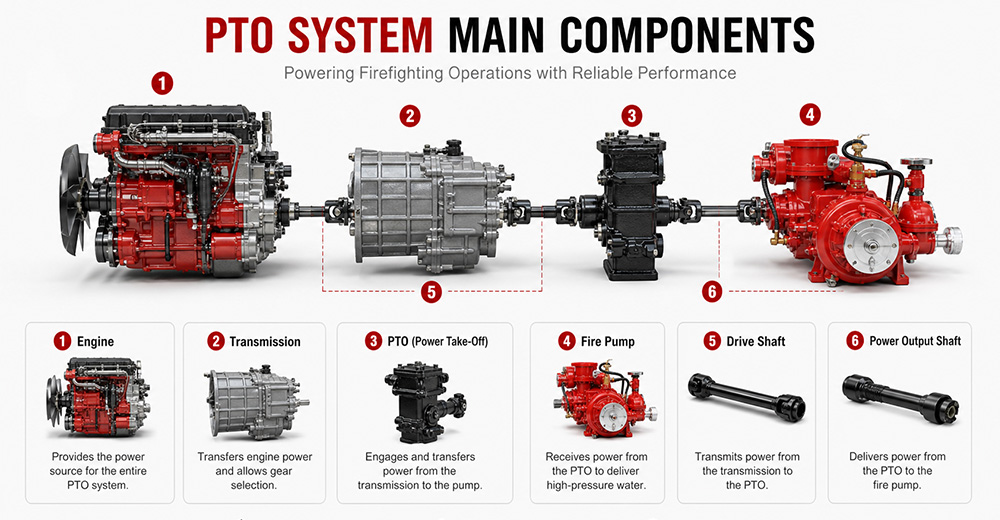
Yangın pompası, mekanik enerjiyi su basıncı enerjisine dönüştürmekten sorumlu PTO sisteminin son yüküdür.
İşlev:PTO'dan dönme gücü alır, çarkı döndürür, suyu çeker ve yüksek basınç altında tahliye eder.
Tip:Santrifüj pompa (tek kademeli, iki kademeli veya çok kademeli).
Tipik debi:20 L/s – 180 L/s (1.200 – 6.000 L/dak).
Tipik basınç:1,0 – 2,5 MPa (10 – 25 bar).
PTO kontrol sistemi, sürücü ile PTO sistemi arasındaki "komuta merkezi"dir; devreye alma, devreden çıkarma, güvenlik koruması ve durum göstergesinden sorumludur.
İşlev:PTO'nun devreye alınmasını ve devreden çıkarılmasını kontrol eder, sistem durumunu izler ve güvenlik koruması sağlar.
Çalışma konumu:Kabin içi (birincil kontrol) ve pompa paneli (yardımcı kontrol).
Kontrol yöntemleri:Manuel kablo, elektrikli solenoid, pnömatik.
Özel kontrol işlevleri:
(1) PTO Devreye Alma Kontrolü
Operatör kabinde PTO anahtarına (elektrikli solenoid/pnömatik) basar veya kolu (manuel) çeker. Kontrol sistemi, PTO'nun iç dişlilerini güç kaynağıyla kavraştırmak için bir sinyal gönderir. Başarılı devreye alma onaylandıktan sonra bir gösterge ışığı yanar ve operatör motor devrini artırabilir.
(2) PTO Devreden Çıkarma Kontrolü
Operatör anahtara tekrar basar veya kolu sıfırlar. Kontrol sistemi sinyali keser ve PTO dişlileri ayrılır. Devreden çıkarma onaylandıktan sonra gösterge ışığı söner.
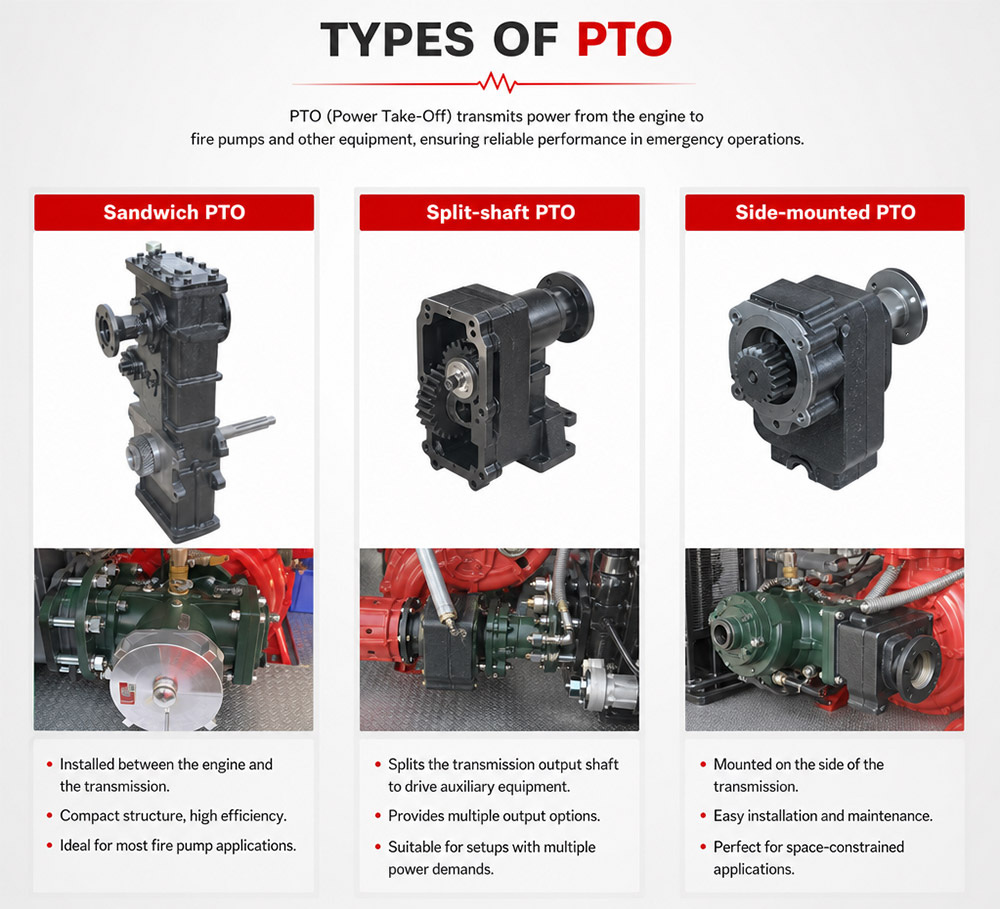
| PTO Türü | Kurulum Konumu | Güç Kaynağı | Güç Çıkışı | Tipik Uygulama |
| Sandviç PTO | Motor ile şanzıman arasında | Motor volanı | Tam güç (≥90%) | İtfaiye pompalı araçları, merdivenli araçlar |
| Bölünmüş mil PTO'su | Şasi ortası tahrik mili | Şanzıman çıkış mili | Tam güç | Büyük vakumlu kamyonlar, havaalanı itfaiye araçları |
| Yandan monteli PTO | Şanzıman tarafı | Şanzıman dişlileri | Kısmi güç (düşük) | Sulama kamyonları, küçük vakumlu kamyonlar |
Sandviç PTO
Avantajlar:Tam güç çıkışı (≥90%), "sürüş sırasında pompalama" (çift işlev) desteği, yüksek aktarım verimliliği, kolay yağlama.
Dezavantajlar:Daha yüksek maliyet, karmaşık kurulum, motor-şanzıman bağlantısında değişiklik gerektirir.
Bölünmüş mil PTO'su
Avantajlar:Tam güç çıkışı, ek alan gerektirmez, yüksek güvenilirlik, iyi dinamik denge, büyük pompaları çalıştırmak için yardımcı motorun yerini alabilir.
Dezavantajlar:Orijinal tahrik milinin kesilmesini gerektirir, montaj konumu seçilirken tahrik mili açısı ve uzunluk telafisi dikkate alınmalıdır.
Yandan monteli PTO
Avantajlar:Düşük maliyet, basit kurulum, gücü doğrudan şanzıman tarafından alabilir.
Dezavantajlar:Yalnızca kısmi güç kullanılabilir, çıkış torku daha düşüktür, yüksek güçlü yangın pompalarını çalıştıramaz, esas olarak düşük hız ve düşük güçlü ekipmanlarda kullanılır.
Süreç, açık bir mekanik aktarım zincirini takip eder:
Motor → PTO → Tahrik Mili → Yangın Pompası → Çark Dönüşü → Emiş → Basınçlandırma → Yangın Monitörü
| Faktör | Rol |
|---|---|
| Santrifüj pompa özelliği | Çark hızı sabit olduğunda, çıkış basıncı doğal olarak sabit kalır |
| PTO rijit bağlantısı | Kayma veya güç kaybı olmaz, sürekli ve dengeli güç girişi sağlanır |
| Basınç regülatörü | Akış değişikliklerini otomatik olarak algılar ve ayarlanan basıncı korumak için motor devrini ayarlar |
| Tahliye valfi | Basınç sınırı aştığında otomatik olarak baypas yaparak ekipman hasarını önler |
① Pompa hızı motor devri tarafından belirlenir
Yangın pompası çark hızı = Motor devri × PTO oranı. PTO oranı sabittir (ör. 1,75:1), bu nedenle pompa hızı doğrudan motor devriyle değişir.
Hesaplama formülü:
Motor devri × PTO oranı = Pompa hızı (RPM)
② Basınç ve hız arasındaki fiziksel ilişki
Santrifüj pompa tarafından oluşturulan basınç, çark hızınınkaresiile orantılıdır. Bu fiziksel yasa, RPM'deki küçük değişikliklerin önemli basınç dalgalanmalarına neden olduğu anlamına gelir.
Hız artar → Santrifüj kuvvet artar → Çıkış basıncı yükselir
Hız azalır → Santrifüj kuvvet azalır → Çıkış basıncı düşer
1. PTO devreye girmiyor
Olası nedenler:Düşük hava basıncı (pnömatik tip), arızalı solenoid, hasarlı veya sıkışmış kablo, kilitleme koşullarının sağlanmaması (park freninin çekilmemesi, şanzımanın boşta olmaması).
Çözümler:Hava sistemi basıncını kontrol edin (≥0,6 MPa olmalıdır); solenoidi test edin; kabloyu inceleyin; park freninin çekili olduğunu ve şanzımanın boşta olduğunu doğrulayın.
2. PTO devreye giriyor ancak pompa çalışmıyor
Olası nedenler:PTO kavraması arızası, kırık tahrik mili veya aşınmış kanallar, hasarlı iç dişliler.
Çözümler:PTO kavramasının devreye girmesini kontrol edin; tahrik milinde kırılma veya gevşek bağlantı olup olmadığını inceleyin; sökün ve iç dişlileri kontrol edin.
3. PTO'dan anormal ses geliyor
Olası nedenler:Zayıf dişli kavraması veya aşınma, aşınmış rulmanlar, yetersiz veya bozulmuş yağlama, PTO'nun tamamen devreden çıkmaması.
Çözümler:Dişli boşluğunu ve diş aşınmasını kontrol edin; rulmanları inceleyin; uygun nitelikte yağlayıcı ile değiştirin; PTO'nun tamamen devre dışı kaldığını doğrulayın.
4. PTO yağ sızıntısı
Olası nedenler:Aşınmış veya bozulmuş contalar, çatlamış gövde, gevşek montaj cıvataları.
Çözümler:Contaları (O-ringler, yağ keçeleri) değiştirin; gövdede çatlak olup olmadığını inceleyin; montaj cıvatalarını sıkın.
5. PTO aşırı ısınıyor
Olası nedenler:Uzun süreli yüksek yükte çalışma, yetersiz veya bozulmuş yağlama yağı, soğutma sistemi arızası.
Çözümler:Soğutma için yükü azaltın veya kapatın; nitelikli yağlayıcıyla değiştirin; soğutma hatlarını inceleyin.
6. PTO yetersiz güç
Olası nedenler:Uygun olmayan PTO oranı seçimi, motor devrinin çok düşük ayarlanması, debriyaj kayması.
Çözümler:PTO oranının yangın pompasıyla eşleştiğini doğrulayın; motor devrini nominal çalışma aralığına yükseltin; debriyajda kayma olup olmadığını inceleyin.
S1. Bir itfaiye aracında PTO ne anlama gelir?
PTO, Power Take-Off (Güç Alma) anlamına gelir. Kamyonun şanzımanından motor gücünü yangın pompasına aktaran mekanik bir sistemdir. Basitçe ifade etmek gerekirse, PTO itfaiye aracının motorunun pompalama sistemine güç vermesini sağlar; böylece ayrı bir motora ihtiyaç duymadan yangın söndürme operasyonları için yüksek basınçlı su veya köpük sağlayabilir. Endüstriyel ve belediye itfaiye araçlarında kritik bir bileşendir.
S2. İtfaiye araçlarının neden PTO'ya ihtiyacı vardır?
İtfaiye araçlarının PTO'ya ihtiyacı vardır çünkü ana motorun yangın pompasını verimli şekilde çalıştırmasını sağlar. PTO olmadan yangın pompası için ayrı bir motor gerekir; bu da maliyeti, ağırlığı ve bakım karmaşıklığını artırır. PTO sistemleri, yangın söndürme operasyonları sırasında sürekli su veya köpük tedarikini sağlamak için kompakt, güvenilir ve yakıt açısından verimli bir yöntem sunar.
S3. Bir itfaiye aracı PTO olmadan çalışabilir mi?
Çoğu modern itfaiye aracı pompalama sistemini PTO olmadan çalıştıramaz çünkü PTO, motor gücünü yangın pompasına aktarmaktan sorumludur. Ancak bazı özel yangın araçları pompayı çalıştırmak için bağımsız bir yardımcı motor kullanabilir. PTO tabanlı sistemlere kıyasla daha yüksek maliyet, artan bakım gereksinimi ve daha düşük verimlilik nedeniyle bu tasarımlar daha az yaygındır.
S4. PTO ile yangın pompası arasındaki fark nedir?
PTO bir güç aktarım cihazıdır, yangın pompası ise su veya köpük pompalama sistemidir. PTO motordan pompaya mekanik güç iletir, yangın pompası ise bu gücü suyu veya köpüğü hareket ettirmek için hidrolik basınca dönüştürür. Kısaca PTO "güç kaynağı bağlantısı", yangın pompası ise "yangın söndürme çıkış cihazı"dır.
S5. Bir itfaiye aracı PTO'su ne kadar güç sağlayabilir?
Bir itfaiye aracı PTO'sunun güç çıkışı, araç tasarımına ve şanzıman sistemine bağlıdır. Genellikle PTO sistemleri 50 kW ile 300 kW'ın üzerinde mekanik güç sağlayabilir. Ağır hizmet tipi endüstriyel ve havalimanı itfaiye araçları, büyük debili yangın pompalarını ve sürekli yüksek basınçlı operasyonları destekleyebilen yüksek kapasiteli PTO sistemleri kullanır.
S6. Farklı itfaiye aracı PTO türleri nelerdir?
Yan montajlı PTO, arka montajlı PTO, bölünmüş mil PTO ve tam güç PTO dahil olmak üzere çeşitli itfaiye aracı PTO sistemleri vardır. Yan montajlı PTO genellikle standart itfaiye araçlarında kullanılırken, bölünmüş mil ve tam güç PTO sistemleri daha yüksek güç çıkışı ve sürekli çalışma gerektiren endüstriyel ve havalimanı itfaiye araçlarında kullanılır.
S7. Bir itfaiye aracı PTO'sunun bakımı nasıl yapılır?
PTO bakımı; yağlama yağı seviyelerinin düzenli kontrolünü, sızıntıların incelenmesini, montaj cıvatalarının sıkılmasını ve tahrik milinin doğru hizalanmasının sağlanmasını içerir. Operatörler ayrıca devreye alma ve devreden çıkarma işlevlerini düzenli olarak test etmelidir. Önleyici bakım, acil durum operasyonları sırasında aşırı ısınmayı, mekanik aşınmayı ve beklenmedik arızaları önlemek için gereklidir.
S8. Bir itfaiye aracı PTO'sunun arızalanmasına ne sebep olur?
PTO arızasının yaygın nedenleri arasında yetersiz yağlama, aşınmış dişliler, tahrik milinin hizasızlığı, aşırı ısınma ve sürücünün yanlış kullanımı bulunur. Elektriksel veya hidrolik kontrol sistemi arızaları da PTO'nun devreye girmesini engelleyebilir. Düzenli bakım ve doğru çalışma prosedürleri PTO arızası riskini önemli ölçüde azaltır.
S9. Endüstriyel itfaiye araçları için hangi PTO en iyisidir?
Endüstriyel itfaiye araçları için genellikle en iyi seçenek bölünmüş mil PTO veya tam güç PTO sistemidir. Bu sistemler yüksek güç çıkışını, sürekli çalışmayı ve büyük kapasiteli yangın pompalarını destekleyebilir. Güvenilir ve uzun süreli yangın söndürme performansının gerekli olduğu petrokimya tesisleri, rafineriler, havalimanları ve büyük endüstriyel tesislerde yaygın olarak kullanılırlar.
S10. Alıcılar bir itfaiye aracı PTO'su seçerken nelere dikkat etmelidir?
Alıcılar motor gücü uyumluluğunu, gerekli yangın pompası debisini, araç tipini ve çalışma ortamını dikkate almalıdır. Ayrıca PTO dayanıklılığı, soğutma performansı, bakım erişilebilirliği ve şasi uyumluluğu değerlendirilmelidir. İhracat projelerinde onay ve operasyonel güvenilirliği sağlamak için uluslararası standartlara ve yerel düzenlemelere uygunluk da göz önünde bulundurulmalıdır.
PTO (Power Take-Off / Güç Alma), motor gücünü yangın pompasına aktaran temel sistemdir — tüm yangın söndürme sisteminin düzgün çalışıp çalışmayacağını belirler.
İtfaiye aracının güç zinciri şöyledir: Motor → Şanzıman → PTO → Tahrik Mili → Yangın Pompası → Yangın Monitörü. Bu zincirdeki herhangi bir zayıf halka, nihai yangın söndürme performansını etkiler.
PTO'nun temel işlevi, ayrı bir motora ihtiyaç duymadan itfaiye aracının verimli su veya köpük tedariki sağlamasına olanak tanıyan kararlı ve sürekli mekanik güç çıkışı sunmaktır.
Farklı PTO türleri (Yan montajlı, Arka montajlı, Bölünmüş mil, Tam güç) farklı itfaiye aracı sınıfları için uygundur. Endüstriyel itfaiye araçları genellikle yüksek güçlü PTO sistemlerine öncelik verir.
PTO performansı yangın pompası debisi ve araç şasisiyle eşleşmelidir; aksi takdirde yetersiz güç, kararsız basınç veya sistem aşırı yüklenmesi gibi sorunlar ortaya çıkabilir.
Düzenli PTO sistemi bakımı (yağlama, sıkma, hizalama kontrolü), özellikle yüksek yoğunluklu endüstriyel uygulamalarda güvenilir itfaiye aracı çalışmasını sağlamanın anahtarıdır.
Endüstriyel itfaiye araçları satın alınırken alıcılar yalnızca fiyata odaklanmamalıdır. PTO gücü, kararlılık, uyumluluk ve satış sonrası destek de değerlendirilmesi gereken aynı derecede kritik faktörlerdir.
Petrokimya tesisleri, havalimanları ve büyük endüstriyel parklar gibi yüksek riskli senaryolar için sürekli operasyon kabiliyeti sağlamak amacıyla Tam Güç PTO veya Bölünmüş Mil PTO sistemleri önerilir.


Aşağıdaki bilgilerle ilgilenebilirsiniz
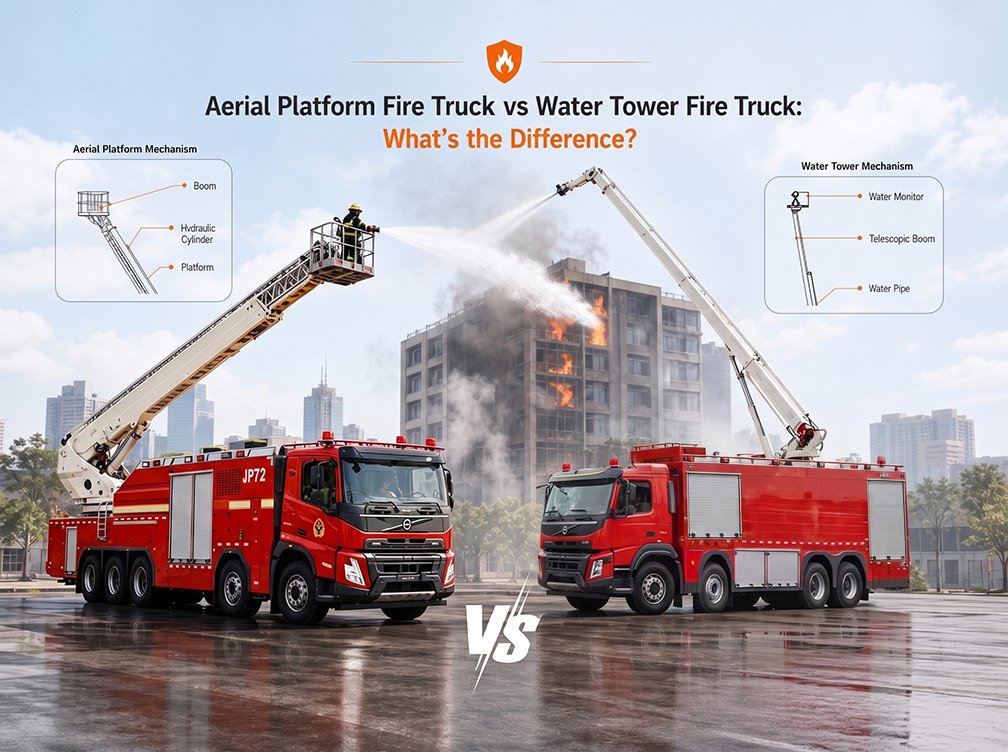
Yüksek binalarda, endüstriyel tesislerde veya büyük depolarda yangınlarla mücadele söz konusu olduğunda, havai yangın araçları vazgeçilmezdir. Ancak çeşitli havai araç türleri arasında ikisi sıklıkla karıştırılır: havai platformlu itfaiye aracı ve su kulesi itfaiye aracı. İlk bakışta benzer görünebilseler de—her ikisi de hidrolik bomlara sahiptir ve yüksekten yangınla mücadele için tasarlanmıştır—temelde farklı görevler üstlenirler. Bu makale, bu iki araç türü arasındaki temel farkları açıklayarak itfaiye hizmeti profesyonellerinin, satın alma yöneticilerinin ve ekipman distribütörlerinin operasyonel ihtiyaçlara göre bilinçli kararlar vermesine yardımcı olur. I. Havai Platformlu Araçlar Nelerdir? Çin ulusal standardı GB 7956.12-2015'e göre, her iki araç da yüksek irtifalı operasyonlar için yükseltilebilir bomlar, döner tablalar ve yangınla mücadele ekipmanlarıyla donatılmış araçlar olan havai yangınla mücadele araçları kategorisine girer. Ancak özel tanımları önemli bir ayrımı ortaya koyar. Havai Platformlu İtfaiye Aracı Bir havai platformlu itfaiye aracı; katlanır veya katlanır-teleskopik kombinasyonlu bir bom, bir personel platformu, bir döner tabla ve yangınla mücadele cihazları ile donatılmıştır.Belirleyici özelliği, kurtarma ve yangınla mücadele operasyonlarını gerçekleştirmek için itfaiyecilerin üzerinde durabileceği bomun ucundaki çalışma platformudur (sepet). Temel özellikler:• Personel ve ekipman taşıyabilen bir platformla donatılmıştır; 750 lbs'den 1.500 lbs'nin üzerine kadar yük taşıyabilir• Hem kurtarma hem de yangınla mücadele için tasarlanmıştır—itfaiyeciler doğrudan platformdan çalışabilir• Platform; iniş kontrol cihazları, hidrolik vinçler veya kurtarma kızakları ile kullanılabilir• Su kulelerine kıyasla daha geniş yatay erişim ve daha büyük çalışma açıklığı sağlar II. Su Kulesi İtfaiye Araçları Nelerdir? Bir su kulesi itfaiye aracı; katlanır veya katlanır-teleskopik kombinasyonlu bir bom, bir döner tabla ve yangınla mücadele cihazları ile donatılmıştır—personel platformu olmadan. Bunun yerine, bom ucuna bir yangın monitörü (su topu) monte edilir ve bu ekipman yerden uzaktan kumanda ile kontrol edilebilir. Temel özellikler:• Personel platformu yoktur—itfaiyeciler uzaktan kumanda aracılığıyla yerden çalışır• Yalnızca yüksekten yangın söndürmeye odaklanır, kurtarmaya değil• Son derece yüksek su debisi sağlar—dakikada 2.000 galonu aşarbirçok endüstriyel modeldeKurtarma kabiliyeti gerekmeyen endüstriyel yangın koruması için tasarlanmıştır III. Yan Yana Karşılaştırma Özellik Merdivenli Platformlu İtfaiye Aracı Su Kulesi İtfaiye Aracı Temel İşlev Kurtarma + yangınla mücadele Yalnızca yangınla mücadele Bom Ucu Ekipmanı Personel için çalışma platformu (sepet) Yangın monitörü (su topu) Bom Üzerindeki Personel Evet—itfaiyeciler platformdan çalışabilir Hayır—uzaktan kumanda ile yerden çalıştırılır Kurtarma Kabiliyeti Yüksek—mahsur kalan kişileri tahliye edebilir Yok Su Debisi Kapasitesi 1.500+ GPM'ye kadar 2.000+ GPM (endüstriyel mod...
Detaylar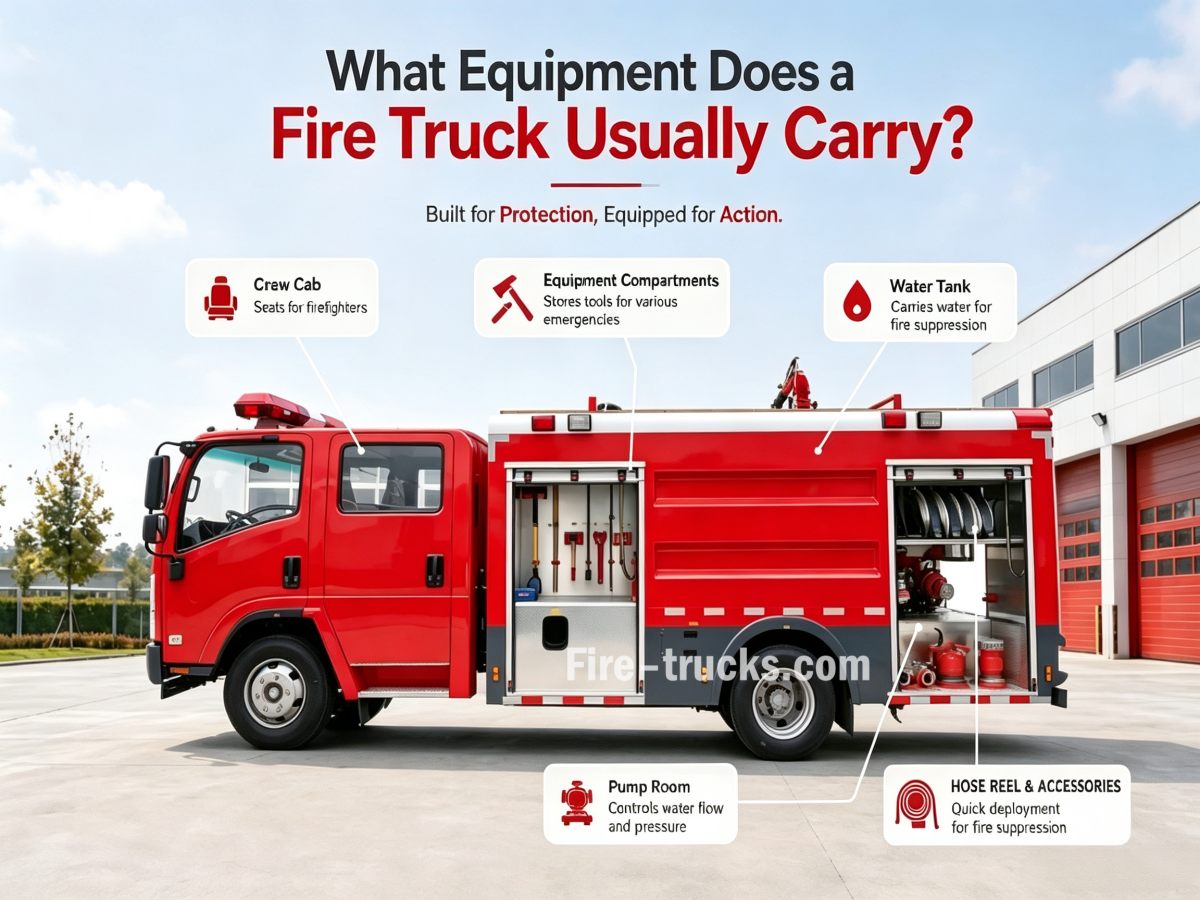
Bir itfaiye aracı genellikle yangınla mücadele, su tedariki, kurtarma ve güvenlik koruma ekipmanları taşır. Yaygın ekipmanlar arasında yangın pompaları, su tankları, yangın hortumları, yangın nozulları, yangın monitörleri, vanalar, yangın merdivenleri, kurtarma araçları, koruyucu ekipmanlar ve iletişim cihazları bulunur. Bu makale, standart yangın aracı ekipmanlarının sınıflandırmasını, işlevlerini ve seçim hususlarını sistematik olarak ele alarakitfaiye aracıekipmanlarının yapılandırmalarını kapsamlı şekilde anlamaları için tedarik uzmanlarına ve son kullanıcılara yardımcı olur. I. İtfaiye Aracı Ekipmanlarının Sınıflandırılması 1. Yangınla Mücadele Ekipmanları— Doğrudan yangın söndürme için kullanılan temel araçlar; yangın nozulları, yangın monitörleri, yangın hortumları, su bölücüler ve adaptörleri içerir. 2. Kurtarma ve Giriş Açma Ekipmanları— Kurtarma ve yangınla mücadele operasyonları için erişim yolları oluşturma araçları; hidrolik kurtarma araçları, yangın baltaları, levye çubukları, manivelalar, kesme testereleri ve zincir testereleri içerir. 3. Kurtarma ve Hayat Kurtarma Ekipmanları— Personelin aranması, taşınması ve korunması için kullanılan ekipmanlar; sedyeler, kurtarma halatları, güvenlik kancaları, iniş kontrol cihazları, bağımsız solunum cihazları (SCBA) ve yedek hava tüplerini içerir. 4. Duman Tahliye ve Aydınlatma Ekipmanları— Yangın sahası koşullarını iyileştirmek için kullanılan ekipmanlar; duman tahliye cihazları, mobil aydınlatma kuleleri ve taşınabilir yüksek yoğunluklu arama projektörlerini içerir. 5. Kişisel Koruyucu Ekipman (PPE)— İtfaiyecilerin güvenliğini koruyan ekipmanlar; kasklar, yapısal yangınla mücadele koruyucu kıyafetleri, eldivenler, botlar ve emniyet kemerlerini içerir. 6. İletişim ve Keşif Ekipmanları— Yangın sahasında bilgi toplama ve komuta koordinasyonu için kullanılan ekipmanlar; iki yönlü telsizler, termal görüntüleme kameraları ve zehirli gaz dedektörlerini içerir. II. İtfaiye Araçlarındaki Yangınla Mücadele Ekipmanları 1. Yangın Pompası Yangın pompası, tüm yangınla mücadele operasyonlarının güç kaynağıdır. Suyu mekanik olarak basınçlandırarak "emme → basınçlandırma → iletim → boşaltım" sürecinin tamamlanması için yeterli kinetik enerji sağlar. Tipik yangın pompası özellikleri: •Standart Basınçlı Yangın Pompası (CB10/30 tipi):Debi ≥30L/s, nominal basınç 1.0MPa, arka montaj kurulumu. Standart su tankerleri ve köpüklü itfaiye araçları için uygundur ve çoğu kentsel ve endüstriyel yangınla mücadele su tedarik gereksinimini karşılar. •Orta/Yüksek Basınçlı Yangın Pompası:Düşük basınçlı akış 1.0MPa'da 30L/s, yüksek basınçlı akış 2.0MPa'da 20L/s, arka montaj kurulumu. Çift basınçlı tasarım, tek bir pompa ile hem yüksek hacimli tedariki (düşük basınç) hem de uzun mesafeli/yüksek katlı iletimi (yüksek basınç) destekler. Kentsel ana müdahale itfaiye araçları ve yüksek katlı yangın söndürme senaryoları için idealdir. •Yüksek Basınçlı Yangın Pompası:Debi 10-15L/s, basınç 4.0MPa veya daha yüksek değerlere ulaşabilir,...
Detaylar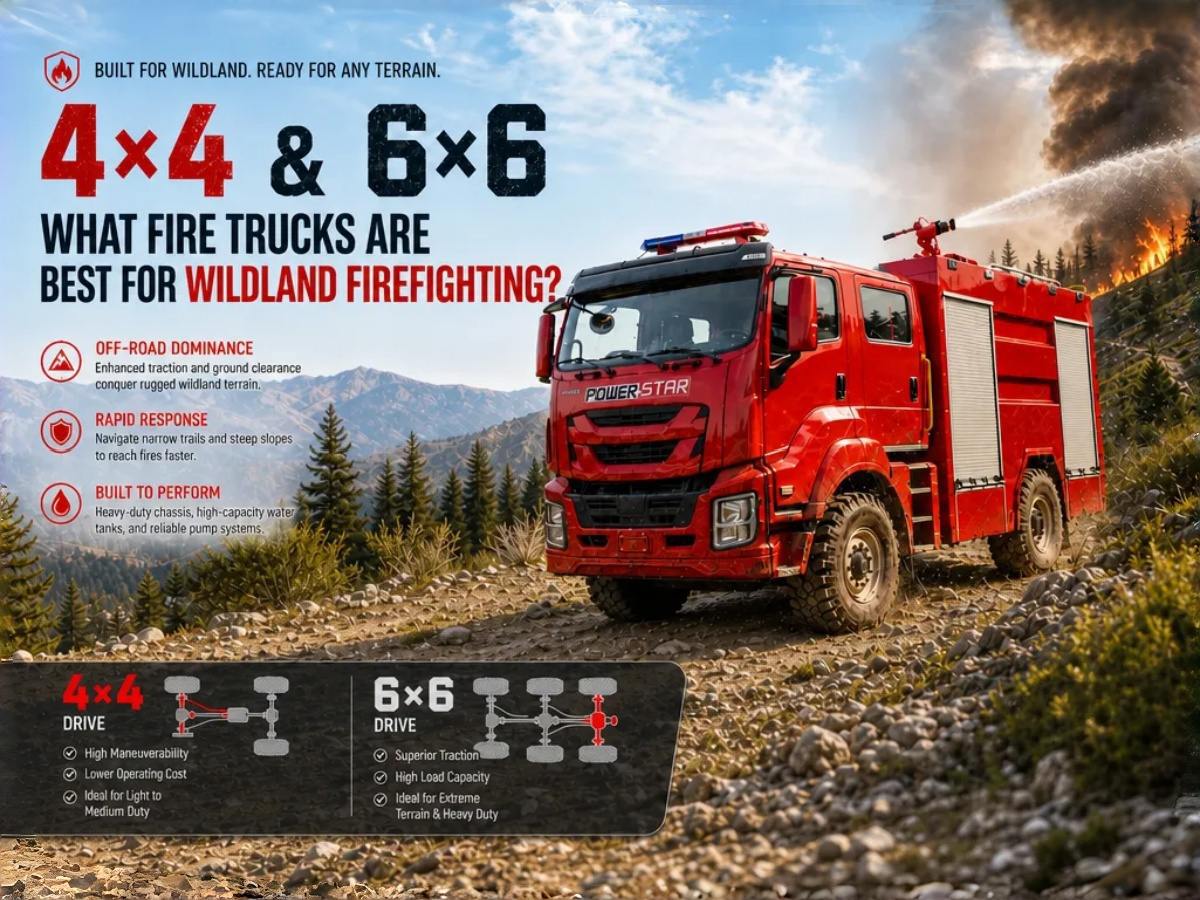
Yaban arazisi yangınla mücadelesi, yapısal yangınla mücadeleden temelde farklı zorluklar sunar. Uzak ormanlarda, çayırlıklarda ve dağlık arazilerde itfaiye araçları dar patikalarda ilerlemeli, dik yamaçlara tırmanmalı ve hidrantlardan veya su kaynaklarından uzakta çalışmalıdır. Doğru yangın söndürme kamyonunu seçmek; müdahale süresini, ekip güvenliğini ve yangın söndürme etkinliğini doğrudan etkileyen stratejik bir karardır. Bu makale, yaban arazisi yangınla mücadelesi için en uygun itfaiye aracı türlerinin, temel özelliklerinin ve seçim yöntemlerinin kapsamlı bir incelemesini sunarak, özel operasyonel gereksinimlerinize göre doğru kararı vermenize yardımcı olur. Kısa Yanıt Yaban arazisi yangınları; geniş yangın alanları, karmaşık arazi yapısı, sınırlı su kaynakları ve kötü yol koşulları ile karakterize edilir; bu nedenle tüm orman yangını senaryolarını yönetebilecek tek bir itfaiye aracı yoktur. Genel olarak, yaban arazisi yangınla mücadelesinde başlıca şu tür itfaiye araçları kullanılır: • Hafif yaban arazisi itfaiye araçları: orman yollarına erişim ve hızlı müdahale için• 4×4 arazi tipi yaban arazisi itfaiye araçları: dağlık ve engebeli araziler için• 6×6 yaban arazisi itfaiye araçları: büyük ölçekli orman yangınları ve uzun süreli operasyonlar için• Su tankerleri: sürekli su tedariki ve destek için• Köpüklü yangın söndürme araçları: petrol tesisleri, orman ekipmanları veya özel yangınlar için• Kurtarma araçları: iletişim, aydınlatma, engel aşma ve lojistik destek için I. Yaban Arazisi Yangınları Neden Özel İtfaiye Araçları Gerektirir? Yaban arazisi yangınları, birkaç kritik açıdan yapısal yangınlardan temelde farklıdır: Yaban arazisi yangınlarının temel özellikleri:• Hektarlarca araziyi kaplayan geniş yangın alanları• Hızla değişen rüzgâr yönleri• Karmaşık ve engebeli arazi yapısı• Hidrantlara veya su kaynaklarına sınırlı erişim ya da hiç erişim olmaması• Dar, asfaltlanmamış orman yolları• Zorlu iletişim koşulları Standart şehir tipi itfaiye araçları, aşağıdaki nedenlerden dolayı genellikle yaban arazisi yangınla mücadelesi için uygun değildir: •Asfaltsız dağ yolları ve dik yamaçlar için 4×4 veya dört tekerlekten çekiş sisteminden yoksundurlar;•Daha büyük boyutları ve düşük yerden yükseklikleri, dar orman patikalarında ve yumuşak arazilerde sıkışmalarına neden olabilir;•Şehir tipi pompalar orta basınçta yüksek debiye öncelik verirken, yaban arazisi operasyonları sınırlı suyla uzun hortum hatlarında yüksek basınç gerektirir; bu temelden farklı bir yaklaşımdır. II. Yaygın Yaban Arazisi İtfaiye Aracı Türleri İtfaiye Aracı Türü Temel Özellikler Uygulanabilir Senaryolar Hafif Yaban Arazisi İtfaiye Aracı Yüksek hareket kabiliyeti, kompakt boyut Orman devriyesi, ilk müdahale 4x4 Yaban Arazisi İtfaiye Aracı Güçlü arazi kabiliyeti Dağlık ve engebeli arazi 6x6 Yaban Arazisi İtfaiye Aracı Büyük su kapasitesi, uzun dayanıklılık Büyük ölçekli orman yangınları Su Tankeri Sürekli su tedariki Lojistik destek, su aktarımı Köpüklü İtfaiye Aracı Özel yangın s...
Detaylar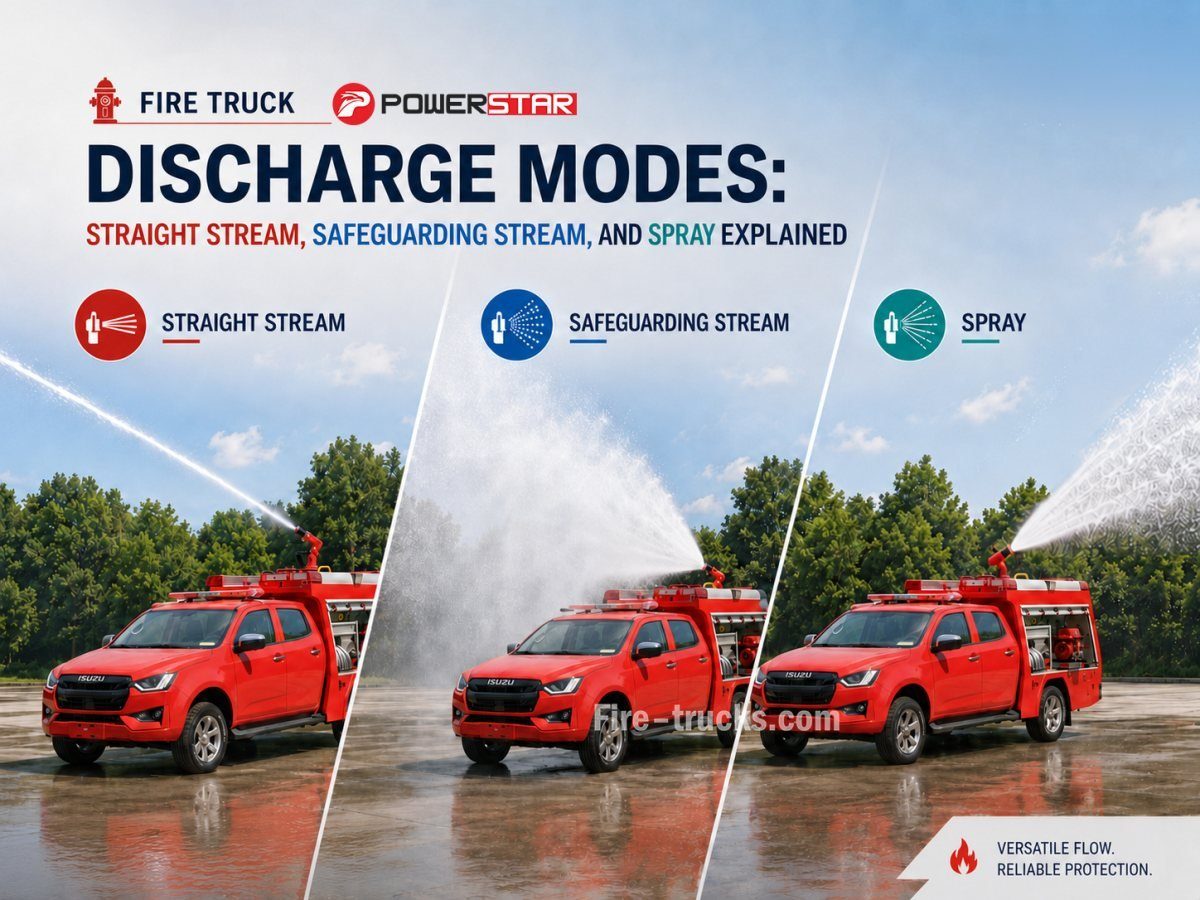
Yangınla mücadele operasyonlarında, tahliye modunun seçimi doğrudan yangın söndürme verimliliğini, operasyonel güvenliği ve yangın kontrol etkinliğini belirler. Çoğu kişi şunun farkında değildir: itfaiye aracı nozulları üç temel tahliye modu arasında geçiş yapabilir: düz akış, püskürtme akışı ve koruma akışı. Farklı modlar, akış şekli, menzil, darbe gücü ve kapsama alanı açısından önemli ölçüde farklılık gösterir ve her biri tamamen farklı yangın senaryolarına uygundur. Bu makale, profesyonel yangınla mücadele operasyon standartlarına dayanarak üç tahliye modunun prensiplerini, temel özelliklerini ve uygulanabilir senaryolarını kapsamlı şekilde analiz ederek müşterilerimizin itfaiye aracı tahliye tekniklerinde sistematik olarak uzmanlaşmasına yardımcı olur. I. İtfaiye Araçlarının Neden Farklı Tahliye Modlarına İhtiyacı Vardır? Düz akış, püskürtme akışı ve koruma akışı üç farklı yangın söndürme mekanizmasına karşılık gelir: darbe ile söndürme, buharlaşma yoluyla boğma ve termal radyasyondan korunma. İtfaiyeciler, olay yeri koşullarına göre esnek şekilde geçiş yapmalıdır. Peki, neden yalnızca tek bir akış türünü kullanmaya devam edemeyiz? 1. Yangın türlerinin çeşitliliği, farklı söndürme ortamı biçimlerini gerektirir Farklı yangın türlerinin farklı yanma özellikleri vardır ve bu özellikler uygun söndürme yöntemini belirler: • A Sınıfı katı madde yangınları, yanan malzemeleri parçalamak ve iç soğutma sağlamak için nüfuz etmek amacıyla düz akış darbesi gerektirir; • B Sınıfı sıvı yangınlarında düz akış darbesi kullanılamaz (bu, sıçramaya ve yangının yayılmasına neden olur); bunun yerine kaplama ve seyreltme için koruma akışı veya püskürtme akışı kullanılmalıdır; • E Sınıfı enerjili elektrik yangınlarında yalnızca püskürtme akışı kullanılabilir, çünkü ince su damlacıkları sürekli bir iletken yol oluşturmaz; • Kapalı alan yangınlarında, tüm alanı doldurmak için püskürtme akışı gerekir; böylece buharlaşma yoluyla ısı emilimi ve boğma etkisi ile söndürme sağlanır. Hiçbir tek mod tüm yangın türlerine uyum sağlayamaz. 2. Aynı yangının farklı aşamaları farklı taktik yaklaşımlar gerektirir Aynı yangın için bile farklı aşamalar farklı tahliye modları gerektirir: • Yangının yoğun olduğu başlangıç aşamasında, hızlı bastırma için yangın noktasına uzun menzilli darbe uygulamak üzere düz akış gerekir; • İlerleme sırasında, termal radyasyonu engellemek ve personeli korumak için su perdesi bariyeri oluşturmak amacıyla koruma akışı gerekir; • Bir odaya girmeden önce, iç müdahale için koşullar oluşturmak amacıyla dumanı ve gazları soğutmak ve seyreltmek için püskürtme akışı gerekir. Tek bir mod, tüm yangınla mücadele süreci boyunca operasyonel ihtiyaçları karşılayamaz. 3. Menzil, kapsama alanı ve soğutma verimliliği aynı anda elde edilemez Üç modun her birinin üç temel boyutta kendi avantajları ve dezavantajları vardır: • Düz akış en uzun menzile sahiptir (120 m+ seviyesine kadar), ancak kapsama alanı küçüktür ve yalnızca noktasal etki sağlar; • Püskürtme akışı alanı ...
Detaylar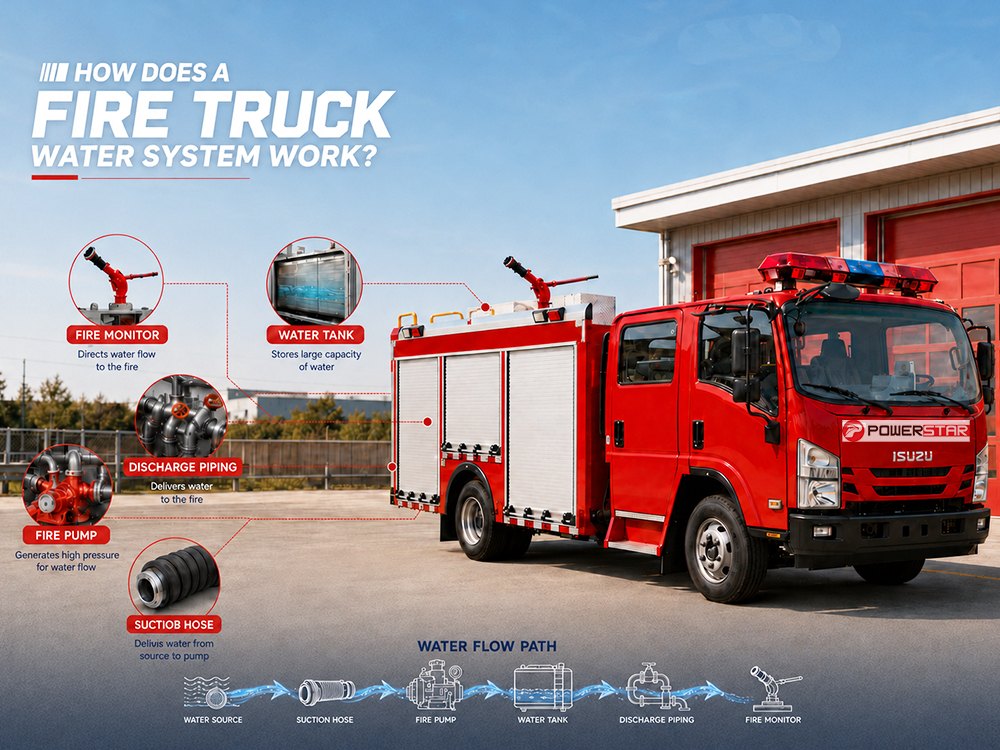
İtfaiye aracının su tesisat sistemi, her yangınla mücadele operasyonunun temelini oluşturur. Suyu tanktan veya harici bir kaynaktan pompa, vanalar ve boru tesisatı aracılığıyla hassas bir şekilde yönlendirerek, ister yoğun bir şehir merkezindeki yüksek katlı bina yangını ister endüstriyel bir bölgedeki petrokimya depolama tankı yangını olsun, yangın mahalline yüksek basınçlı su veya köpük ulaştırır. itfaiye aracı su tesisat sistemi, birlikte çalışan birden fazla bileşenden oluşur: yangın pompası, su tankı, emiş hortumu, basma boru tesisatı, vanalar, dağıtıcı bağlantı, toplayıcı bağlantı, süzgeç, yangın monitörü, hortum kaplinleri ve daha fazlası. Tam akış yolu şöyledir: Su Tankı → Emiş Hortumu → Süzgeç → Yangın Pompası → Basınç Düzenleme Sistemi → Basma Manifoldu → Vanalar → Dağıtıcı Bağlantı → Yangın Monitörü / Hortum Kaplinleri → Nozul Bu makale, su tesisat sisteminin her bileşenini ve bunların doğru basınç ve debide su sağlamak için nasıl birlikte çalıştığını açıklar. I. Su Tesisat Sisteminin Temel Bileşenleri Su Tankı Araç üzerindeki su kaynağını depolar. ● Kapasite: Genellikle 2.000–12.000 litre. ● İletim: Alma boru tesisatı aracılığıyla pompaya besleme sağlar. ● Özellikler: Araç stabilitesi için dalgalanma önleyici perdeler, kalıntıları filtrelemek için süzgeç ve doğal su kaynaklarından su çekmek için ön doldurma sistemi. Yangın Pompası PTO aracılığıyla kamyon motoru tarafından çalıştırılan santrifüj pompa; tek/çok kademeli, dökme demir veya bronz. ● Basınç sınıfları: Standart 0,8 MPa, 1,0 MPa, 1,2 MPa ve 1,4 MPa değerlerinde mevcuttur; tipik yangınla mücadele gereksinimleriyle uyumludur. ● Debi oranları: Hem yüksek basınçlı hem de yüksek hacimli operasyonlar için optimize edilmiş performans eğrileriyle 1.200 ila 6.000 L/dak arasında değişir. Vanalar ve Boru Tesisatı Su akışının yönünü ve hacmini kontrol eden bir boru ve vana ağıdır. ● Giriş vanası: Pompayı harici su kaynaklarına bağlar (hidrant veya su çekme noktası) ● Tanktan pompaya vanası: Pompanın doğrudan araç üzerindeki tanktan su çekmesini sağlar ● Basma vanaları: Hortumlara ve nozullara giden su akışını kontrol eder II. İtfaiye Aracı Su Tesisat Sisteminin Çalışma Prensibi Adım 1: Su Alma ve Ön Doldurma Su, sisteme araç üzerindeki tanktan, yangın hidrantından veya doğal su kaynaklarından (göller, nehirler, göletler) girer. Doğal kaynaklardan su çekilirken ön doldurma sistemi (vakum pompası), emiş hortumundaki havayı gidererek atmosfer basıncının suyu pompaya itmesini sağlayan bir vakum oluşturur. Bir süzgeç, pompayı korumak için kalıntıları filtreler ve çek valf geri akışı önler. Adım 2: Pompa Basınçlandırması Santrifüj pompa, güç çıkışı (PTO) aracılığıyla kamyon motoru tarafından tahrik edilir. Su pompayı doldurduğunda, çark yüksek hızda (1.500–2.500 RPM) döner. Santrifüj kuvvet suyu dışarı doğru savurarak hızını artırır. Pompa gövdesi bu hızı basınca dönüştürür (genellikle 0,8–1,2 MPa). Elektronik basınç regülatörü ayarlanan basıncı otomatik olarak korurken, tahliye valfi aşırı b...
Detaylar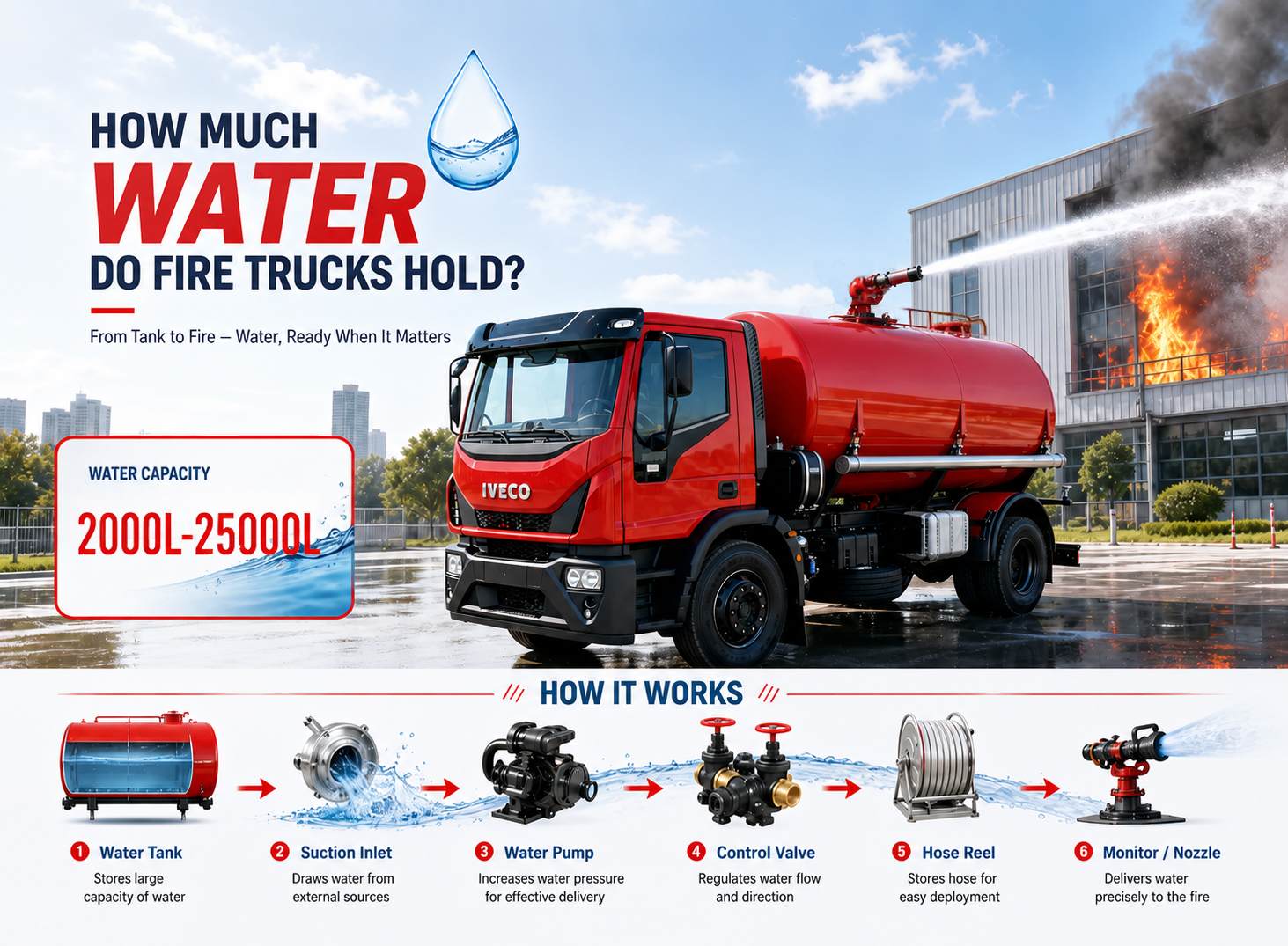
Bir itfaiye aracı ne kadar su taşıyabilir? Bu, müşterilerimizin bir itfaiye aracı seçerken karşılaştığı ilk sorulardan biridir. Tek bir sabit sayı yoktur — araç tipine, şasi kapasitesine, tasarım amacına ve bölgesel düzenlemelere bağlıdır; hafif hizmet tipi 2.000 litrelik birimlerden 25.000 litrelik endüstriyel itfaiye araçlarına kadar değişebilir. Ancak daha büyük bir tank her zaman daha iyi performans anlamına gelmez;itfaiye aracı su tankı kapasitesi, etkili yangın söndürme sonuçları sağlamak için pompa debisi, monitör boşaltma debisi ve şasi kapasitesiyle uygun şekilde eşleştirilmelidir. Bu makale, itfaiye aracı su tankı kapasitesinin temelleriyle başlar, farklı araç türleri için tipik depolama aralıklarını analiz eder, tank tasarımını etkileyen temel faktörleri inceler ve pratik satın alma rehberliği sunar. Önemli Noktalar: İtfaiye aracı su tankı kapasitesi genellikle 2.000 ila 25.000 litre arasında değişir Farklı itfaiye aracı türlerinin farklı tank kapasiteleri vardır Daha büyük bir tank, daha iyi yangın söndürme kabiliyeti anlamına gelmez Tank kapasitesi, pompa debisi, monitör debisi ve şasi kapasitesiyle uyumlu olmalıdır Endüstriyel yangın söndürme genellikle büyük tanklar gerektirirken, belediye yangın söndürme hizmetleri manevra kabiliyetine öncelik verir » I. Üç Temel İtfaiye Aracı Su Tankı Türü Pompalı İtfaiye Araçları:Bunlar en yaygın belediye itfaiye araçlarıdır. Su tedariki için öncelikle yangın hidrantlarına güvenirler ve ilk müdahale için yaklaşık 1.900–3.800 litre dahili su taşırlar. Bu araçların temel unsuru tank değil, pompadır — bir hidrant bağlantısı yapıldıktan sonra basınçlı su vermek üzere tasarlanmışlardır. Tanker İtfaiye Araçları (Su Taşıma Araçları):Bu araçlar büyük miktarda su taşımaya adanmıştır ve tank kapasiteleri genellikle 11.400 litreyi aşar. Yangın hidrantlarının bulunmadığı kırsal ve uzak bölgelerde kritik bir rol oynarlar; pompaların kullanması için su kaynaklarından yangın alanına su taşırlar. Pompalı-Tanker İtfaiye Araçları:Bu araçlar pompalama ve su taşıma işlevlerini tek bir ünitede birleştirir. Hem yangın söndürme için su boşaltabilir hem de diğer araçlara su sağlayabilirler. Tank kapasiteleri genellikle 5.700 ila 11.400 litre arasında değişir ve bu da onları itfaiye teşkilatları için çok yönlü bir çözüm haline getirir. » II. Farklı İtfaiye Aracı Türleri Ne Kadar Su Taşıyabilir? İtfaiye Aracı Türü Tipik Tank Kapasitesi Ana Uygulama Hafif hizmet tipi itfaiye aracı 2.000–3.000 L Kentsel hızlı müdahale, ilk müdahale Belediye pompalı itfaiye aracı 3.000–6.000 L Belediye yangın söndürme hizmetleri, yapı yangınları Orta hizmet tipi pompalı itfaiye aracı 6.000–10.000 L Birleşik kentsel ve endüstriyel görevler Ağır hizmet tipi pompalı itfaiye aracı 10.000–15.000 L Uzun süreli operasyonlar, uzun mesafeli müdahale Endüstriyel itfaiye aracı 15.000–25.000 L Petrol, kimya, madencilik yangın söndürme hizmetleri » III. İtfaiye Aracı Su Sistemi Nasıl Çalışır? Bir itfaiye aracı yalnızca hareketli bir su tankı değildi...
Detaylar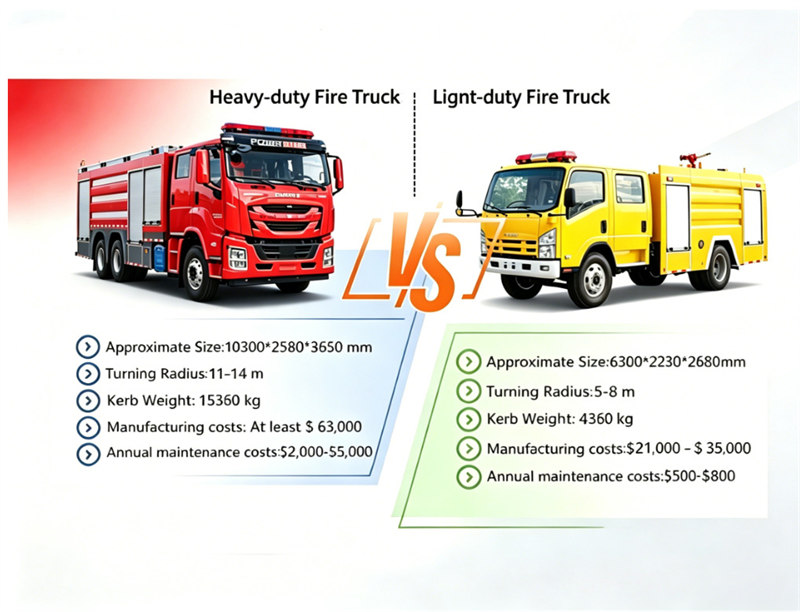
İtfaiye kurtarma aracı ihtiyaçları metropol bölgeler ile kırsal veya küçük kasaba toplulukları arasında büyük ölçüde değişir. Büyük şehir itfaiyeleri; yüksek katlı yangınları, endüstriyel yangınları ve büyük ölçekli acil durumları yönetmek için devasa su tanklarına, yüksek binalara erişim sağlayan merdivenlere ve tam endüstriyel sınıf donanımlara sahip ağır hizmet tipi itfaiye araçlarına güvenir. Ancak küçük şehirler, kırsal kasabalar, köy itfaiye istasyonları ve gönüllü itfaiye teşkilatları için ağır itfaiye araçları çoğu zaman avantajdan çok yük haline gelir. Bu nedenle hafif itfaiye araçları, dünya genelindeki küçük şehir ve kırsal itfaiye teşkilatları için ana akım ve en pratik çözüm haline gelmiştir. Kompakt boyut, esnek hareket kabiliyeti, temel kurtarma işlevlerinin eksiksizliği ve düşük toplam maliyetleri dengeleyen bu araçlar, yerel itfaiye ekiplerinin günlük kurtarma ve yangın önleme ihtiyaçlarına mükemmel şekilde uyum sağlar. Hafif itfaiye aracı; yerel, banliyö ve kırsal yangın senaryoları için özel olarak tasarlanmış kompakt, hafif bir acil durum itfaiye aracıdır. I. Ağır hizmet tipi itfaiye araçları ile hafif hizmet tipi itfaiye araçları arasındaki karşılaştırma: Açıkça görmek için ağır hizmet tipi ve hafif itfaiye araçları arasındaki farkı göstermek amacıyla, temel pratik ölçütleri kapsayan doğrudan bir karşılaştırma tablosu hazırladık. Ağır modeller 10 metrenin üzerinde uzunluğa, 11–14 m dönüş yarıçapına ve 15 ton boş ağırlığa sahiptir; üretim maliyetleri en az 63.000 $ olup yıllık bakım giderleri 2.000–5.000 $ arasındadır. Buna karşılık kompakt hafif itfaiye araçları boyutları neredeyse yarıya indirir, yalnızca 4.360 kg ağırlığındadır, 21.000 $'dan başlayan fiyatlara sahiptir ve yıllık bakımı 800 $ altında tutar; böylece kırsal ve küçük kasaba istasyonları için çok daha iyi hareket kabiliyeti ve bütçe değeri sunar. Ⅱ.Hafif kamyon tipi itfaiye araçlarının öne çıkan özellikleri: 1.Hafif ancak yüksek taşıma kapasiteli tasarım. Araç tamamen yüklü olsa bile toplam brüt araç ağırlığı 8.000 kg'ın altında kalır ve son derece hızlı acil müdahale sağlar. 2.Uzak bölgelerde yaygın olan zorlu ve engebeli yol yüzeyleriyle başa çıkmak için dört tekerlekten çekiş özelleştirmesi mevcuttur. 3.Kapsamlı yangınla mücadele işlevleri tamamen korunur: a. Su ve yangın söndürme köpüğü için çift bağımsız tank. b. Müdahale eden itfaiyecilerden oluşan tam ekibi barındırmak için çift sıralı mürettebat kabini. c. Acil kurtarma yangınla mücadele ekipmanlarının eksiksiz standart envanteri. d. Olay yeri aydınlatma sistemleri ve çekme ekipmanı dahil isteğe bağlı ek donanımlar. 4.Güç çıkışı (PTO) sistemi temel çalışma tahriki olarak görev yapar. Sezgisel kontrollere ve kolay bakım ile parça değişimine sahiptir. Dayanıklı temel bileşenler, kırsal ve ilçe itfaiye teşkilatları için uzun vadeli acil durum operasyon maliyetlerini önemli ölçüde azaltır. Ⅲ.Aşağıdakiler en popüler hafif hizmet tipi itfaiye aracı modelleridir: Şasi Modeli HOWO...
Detaylar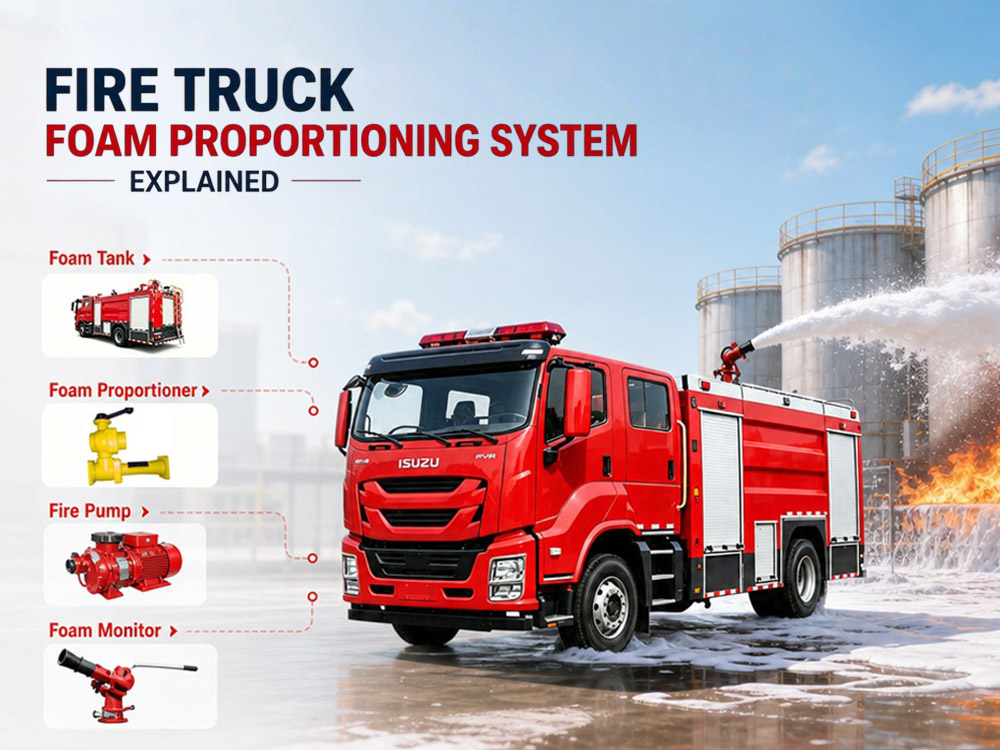
İtfaiye aracının köpük sistemi, köpük çözeltisi oluşturmak için suyu hassas oranlarda (%1, %3 veya %6) köpük konsantresiyle karıştırır. Bu çözelti daha sonra yangın pompası tarafından basınçlandırılır ve köpük nozulları aracılığıyla havayla genleştirilir — bu, bir köpüklü itfaiye aracının köpük ve suyu nasıl karıştırdığının temel çalışma prensibidir — sonuçta yakıt yüzeyini kaplayan dengeli bir köpük örtüsü oluşur. Bu işlem, köpük konsantresi israfını %30 azaltırken yangınla mücadele verimliliğini %50'den fazla artırır. » I. Bir İtfaiye Aracının Neden Köpük Sistemine İhtiyacı Vardır? Yalnızca su kullanımıyla karşılaştırıldığında, köpük üç temel avantaj sunar: 1. Oksijen İzolasyonu — Köpük, yanan yüzeyi kaplayarak oksijenin yanma bölgesine ulaşmasını önleyen yoğun bir fiziksel bariyer oluşturur ve böylece yangını bastırır. 2. Sıcaklık Azaltma — Köpük çözeltisindeki su içeriği buharlaşırken büyük miktarda ısı emer ve yanan alanın sıcaklığını hızla düşürür. 3. Yeniden Tutuşmayı Önleme — Köpük tabakası, söndürme işleminden sonra bile yangın alanını kaplamaya devam eder; oksijeni ve yanıcı buharları etkili şekilde izole ederek yeniden tutuşma riskini önemli ölçüde azaltır. » II. Köpük Sisteminin Temel Çalışma Prensipleri 1. Oranlama Sistemi: Su oranlayıcıdan akar → negatif basınç oluşturur (negatif basınç sistemi) veya bir köpük pompası kullanır (pozitif basınç sistemi) → köpük tankından köpük konsantresini çeker → önceden ayarlanmış oranda (%1, %3 veya %6) karıştırır → köpük çözeltisi pompaya akar. 2. Pompa Basınçlandırması: Köpük çözeltisi santrifüj pompaya girer → 0,8–1,2 MPa basınca çıkarılır → boru hatları aracılığıyla çıkışlara veya köpük monitörüne iletilir. 3. Köpük Genleşmesi: Basınçlı köpük çözeltisi bir köpük nozülünden veya havalandırıcı cihazdan geçer → hava içine alınır → çözelti bitmiş köpüğe genleşir → yakıt yüzeyini kaplar → oksijeni keser ve yangını bastırır. Temel Kavram: Köpük konsantresi + su, bitmiş köpük anlamına gelmez. Karıştırılmış köpük çözeltisi hâlâ bir sıvıdır — gerçek yangın söndürme köpüğüne dönüşmesi için bir köpük nozülü aracılığıyla havayla birleştirilmesi gerekir. Yüksek basınçlı köpük çözeltisi nozül içinden yüksek hızla geçtiğinde, havayı zorla içine çeken yerel bir negatif basınç bölgesi oluşturur. Hava ve sıvı, nozül içinde çarpışarak şiddetli şekilde kesilir ve anında milyonlarca küçük kabarcığa ayrılır; bu kabarcıklar birikerek beyaz köpüğü oluşturur. » III. Bir İtfaiye Aracı Köpük ve Suyu Nasıl Karıştırır? Bir itfaiye aracındaki köpük karıştırma işlemi, su beslemesinden son köpük oluşumuna kadar dört ana adımdan oluşur. Adım 1: Yangın Pompası Su Akışını Sağlar İtfaiye aracı çalıştırıldıktan sonra yangın pompası köpük sistemi için güç sağlar. Su kaynakları araç üzerindeki tankı, yangın hidrantını, nehirleri, gölleri veya rezervuarları içerebilir. Yangın pompası, su basıncı oluşturmak, dengeli akış sağlamak ve suyu köpük oranlama sistemine itmekten sorumludur. Adım 2: Köpük Konsantresi Sisteme Girer İtfaiye ara...
Detaylar
Lütfen okumaya devam edin, haberdar kalın, abone olun ve düşüncelerinizi bizimle paylaşmanızı bekliyoruz.

 IPv6 Ağ Desteklendi

 Türkçe
 English
 français
 Deutsch
 русский
 italiano
 español
 português
 Nederlands
 العربية
 日本語
日本語 한국의
한국의 Melayu
 ไทย
ไทย Tiếng Việt
 Indonesia
  中文
中文 қазақ
қазақ Filipino
 မြန်မာ
 српски